In a world filled with noise, sometimes silence speaks the loudest. Gandhi Talks, a unique Indian silent film released in 2026, dares to break the mold. With no spoken words, no dialogues—only expressions, visuals, and music—this film grabs your attention from the very first frame. Directed by Kishor Pandurang Belekar and featuring Vijay Sethupathi and Arvind Swamy, it challenges what we expect from modern cinema.
Let’s dive into this one-of-a-kind film and see if its silence truly speaks louder than words.
Film Overview
Basic Info
Gandhi Talks is not your typical Bollywood movie. It’s a multilingual silent drama starring Vijay Sethupathi, Arvind Swamy, Aditi Rao Hydari, and Siddharth Jadhav. The story unfolds without any spoken dialogues, relying instead on powerful background music composed by the legendary A.R. Rahman.
Kishor Pandurang Belekar, known for his offbeat storytelling, directs this visual poem. The runtime is about 1 hour 50 minutes, and the movie was released in theaters across India in January 2026.
What Makes It Unique
This is not India’s first silent film—but it’s the first in decades to be backed by a big cast and a renowned composer. In a cinematic space where dialogue often drives drama, Gandhi Talks throws that rulebook out the window. It revives the forgotten art of mimed storytelling and sets it against the backdrop of a bustling, greedy, and chaotic urban landscape.
Its silent treatment forces the audience to focus deeply—on expressions, symbols, and most importantly, emotions.
Plot Summary (No Spoilers)
The film centers around Mahadev, an ordinary man struggling to find a job in Mumbai. His journey, filled with desperation and small dreams, gets tangled with a flashy businessman and a clever pickpocket. As the day unfolds, each character reveals their values—or lack of them.
Money is at the heart of the plot. We see what people will do when faced with need, greed, or both. Despite having no dialogues, the story is surprisingly easy to follow thanks to the strong visual cues and rhythmic editing.
It’s like watching a dance between right and wrong, rich and poor, speech and silence.
Cast Performances
Vijay Sethupathi delivers a powerful performance as Mahadev. With no lines to speak, he relies on body language and facial expressions—and he nails it. His eyes, posture, and timing speak volumes.
Arvind Swamy, as the business tycoon, brings a magnetic screen presence. His sharp looks and slow movements hint at the cold calculations of someone who measures everything in money.
Aditi Rao Hydari adds grace to the screen with her expressive role, while Siddharth Jadhav gives the story a bit of edge with his street-smart pickpocket character.
Each actor seems deeply connected to their role, and without the crutch of dialogues, their performances feel raw and honest.
Technical Review
Direction & Screenplay
Belekar’s direction is bold. He takes a risk by making a mainstream silent film in today’s fast-paced world—and somehow, he pulls it off. The screenplay is tight. Scenes are short and expressive. Not a second is wasted.
Belekar uses simple storytelling tools like light, shadow, and repetition to guide the viewer. It feels like reading a comic book, where every frame pushes the story forward.
Cinematography & Editing
Visuals are the lifeline of Gandhi Talks. The camera work by Abinandhan Ramanujam is rich with contrast—bright city lights vs. dark alleyways, luxury vs. poverty, calm vs. chaos.
The editing is crisp. Transitions are smooth. Scenes flow without confusion, which is vital when there’s no one talking.
Music & Sound Design
A.R. Rahman’s background score is the true voice of the movie. It gives soul to scenes. His music knows when to rise and when to go quiet. From melancholic piano notes to thumping beats in tense moments, the soundscape replaces dialogue with emotion.
Ambient sounds—footsteps, street noise, a door creaking—also play an important role. They help us feel the world of the characters.
Critics’ Reactions
Reviews are mixed but leaning toward positive. Many film critics praised the movie for its courage and creativity. They appreciated the direction, the acting, and Rahman’s magical music.
However, not everyone was impressed. Some found the pacing too slow or felt the story didn’t go deep enough. A few critics said the silence felt more like a gimmick than a necessity.
Still, even the harshest reviews admitted that the film tries something new—and in today’s safe, formula-driven cinema, that’s worth noticing.
Audience & Social Reactions
Audiences had a lot to say—even if the movie didn’t. On social media, people called it “experimental but effective,” “hauntingly silent,” and “emotionally rich.”
Some viewers found it hard to adjust at first, expecting traditional Bollywood entertainment. But by the end, many appreciated the fresh take on storytelling.
Fans of Vijay Sethupathi and A.R. Rahman especially enjoyed the film, praising it as “art with a heartbeat.”
Themes & Messages
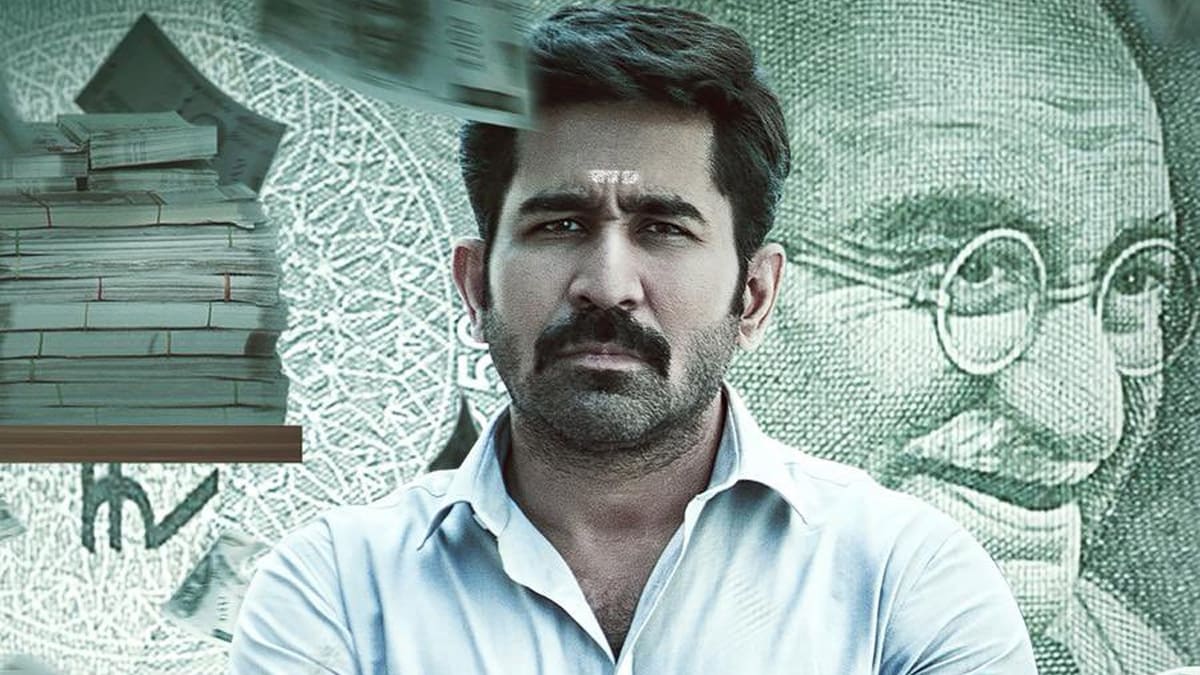
At its core, Gandhi Talks explores money—how it controls lives, divides people, and changes morals. The film’s title hints at this idea. In India, the currency bears Mahatma Gandhi’s image. So, when money “talks,” it’s Gandhi who speaks.
Other themes include capitalism, class struggle, and moral decay. The story doesn’t scream its messages. Instead, it quietly shows you the choices people make when pushed into a corner.
Silence becomes a metaphor for how we ignore injustice, how we don’t speak out, and how sometimes, silence says more than words ever can.
Comparison with Other Silent Films
Gandhi Talks invites comparison to earlier Indian silent films like Pushpaka Vimana (1987). That film also used silence to explore dark comedy and societal issues.
But Gandhi Talks is bolder in its political undertones and use of modern urban imagery. It doesn’t just aim to entertain—it wants to wake you up.
This movie also reminds us of global silent cinema like The Artist or even classics by Charlie Chaplin, where expression beats speech.
Who Should Watch It?
If you love art films, experimental cinema, or non-verbal storytelling, you’ll find this movie fascinating. It’s for those who are tired of loud movies with no meaning and are open to something different.
It’s also a great watch for film students, actors, or music lovers who want to see how expression, music, and movement can tell a complete story.
However, if you’re looking for action, comedy, or a fast-paced thriller, this may not be your cup of tea.
FAQs
Q: Is Gandhi Talks based on Mahatma Gandhi’s life?
No. The title refers to Indian currency and how money influences society—not to Mahatma Gandhi directly.
Q: Is this movie suitable for kids?
Yes, mostly. It’s rated UA in India, so parental guidance is advised for younger children, but there’s no strong language or violence.
Q: Where can I watch Gandhi Talks?
As of now, the movie is running in theaters. Streaming rights may go to ZEE5 or another major OTT platform in the coming months.
Conclusion & Final Verdict
Gandhi Talks is not just a movie—it’s an experiment. It might not be perfect, but it’s bold. It respects the intelligence of its audience. It challenges filmmakers to try harder, and viewers to listen to silence.
With strong performances, a haunting soundtrack, and a story that touches the soul, Gandhi Talks deserves a watch. Whether you love it or not, you won’t forget it.