I want to be honest with you right upfront.
When I first heard about Thaai Kizhavi, I had a very familiar feeling — the kind you get when you’ve seen one too many Tamil films try to do a “rural comedy with heart” and land somewhere between forgettable and frustrating. I’ve sat through too many of those.
But then I saw the first teaser. An old woman with fire in her eyes, commanding a whole village, feared by everyone around her. And I thought — okay, this might be something different.
It is.
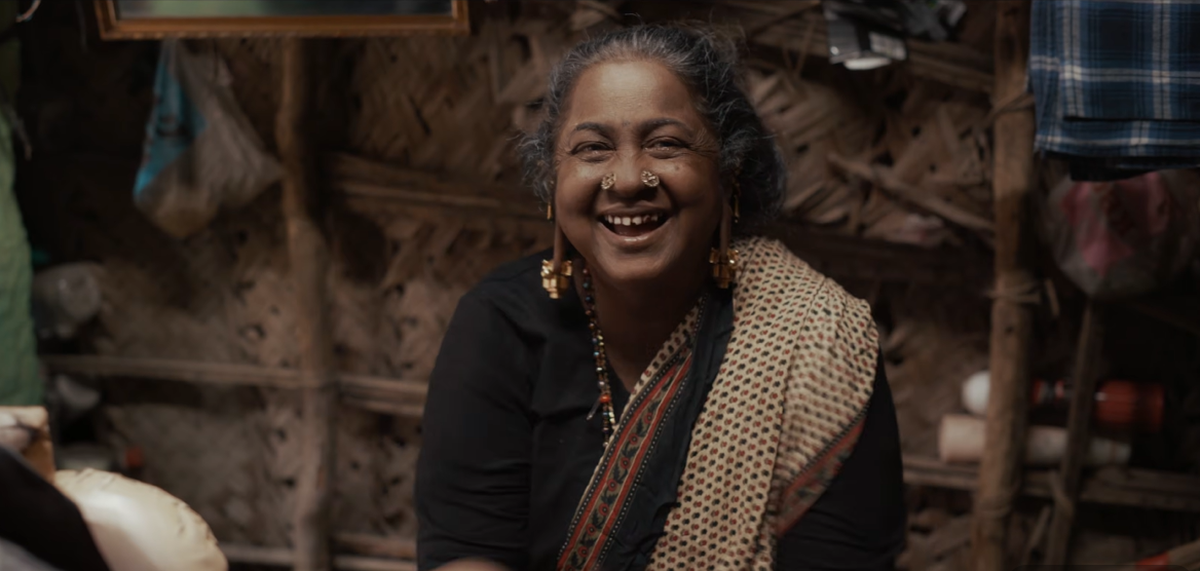
Thaai Kizhavi, directed by debutant Sivakumar Murugesan and produced by Sivakarthikeyan Productions and Passion Studios, released in theatres on February 27, 2026. The film stars the legendary Radikaa Sarathkumar as Pavunuthayi — a 70-year-old village moneylender who runs her world entirely on her own terms. And what a world it is.
Is the film perfect? No. Does it stumble in places? Yes. But does it leave you thinking, feeling, and maybe even a little moved? Absolutely. I’d give it a solid 3.5 out of 5 stars — and let me walk you through exactly why.
Movie At a Glance
Before I get into the full breakdown, here’s everything you need to know at a glance:
| Detail | Information |
|---|---|
| Film Title | Thaai Kizhavi |
| Release Date | February 27, 2026 |
| Director | Sivakumar Murugesan (Debut) |
| Lead Cast | Radikaa Sarathkumar, Singam Puli, Aruldoss, Bala |
| Supporting Cast | Munishkanth, Muthukumar, Raichal Rabecca, Ilavarasu, George Mariyan |
| Music | Nivas K. Prasanna |
| Cinematography | Vivek Vijayakumar |
| Editor | San Lokesh |
| Runtime | 144 minutes |
| Genre | Comedy-Drama |
| Language | Tamil |
| OTT Platform | JioHotstar |
| Satellite Rights | Vijay Television |
| Producer | Sivakarthikeyan & Sudhan Sundaram |
| Production House | Sivakarthikeyan Productions & Passion Studios |
The Story — What Is Thaai Kizhavi About?
Let me set the scene for you.
In a dusty, lively little village in rural Tamil Nadu lives Pavunuthayi — played brilliantly by Radikaa Sarathkumar. She is not your typical screen grandmother. She doesn’t knit sweaters or offer warm bowls of porridge. She is a moneylender — sharp-tongued, iron-willed, and deeply feared by every single person in her village. The woman commands the kind of authority that most heroes in mainstream Tamil cinema can only dream of.
She lives with her daughter and grandson, having deliberately cut herself off from her three sons years ago after a major falling-out. The village knows her. The village fears her. And honestly? The village kind of despises her too.
Then, without warning, Pavunuthayi collapses.
She’s found in critical condition, and just like that, the three estranged sons — each carrying their own grudges, their own debts, and their own greed — are forced to come back home. What follows is a chaotic, funny, and surprisingly tender family drama where long-buried secrets slowly rise to the surface. The sons aren’t there out of love, of course. They want their share of the jewels. Their share of the property. Their inheritance.
And that’s where the film finds its beating heart — in the collision between self-interest and family loyalty, between old wounds and new realizations, between a mother who never asked for anyone’s sympathy and children who never earned hers.
The central theme here is female financial independence and agency, and the film handles it with more wit and grace than most Tamil films have managed in years.
Direction & Writing — A Debut That Demands Attention
Sivakumar Murugesan is not a name you’ve heard much. But after Thaai Kizhavi, you will.
Before directing this film, he worked as an assistant director and screenwriter on Kadaisi Vivasayi (2022) — one of the most quietly powerful Tamil films in recent memory. That influence is visible here. There’s a similar rooted-ness to Thaai Kizhavi, a genuine feeling that the director knows this world intimately and respects it deeply.
What I loved most about Murugesan’s writing is how boldly he dismantles familiar archetypes. Tamil cinema has a well-worn playbook for older women characters. You get the evil mother-in-law — domineering, petty, cruel. Or you get the saintly, self-sacrificing Amma — a woman who exists purely to dissolve into her children’s lives like a candle. Manormama has practically built a career on that second archetype.
Pavunuthayi is neither of those things. She’s complicated, flawed, occasionally ruthless, and deeply human. She subverts the “Thaai Kizhavi” stereotype in the most refreshing way. The title itself — which loosely translates to “old mother” — becomes a reclamation rather than a dismissal.
The ensemble of supporting characters is another genuine strength. There’s a homeless alcoholic loafer who lives on offerings made to the village deity Karuppan — and his one-sided conversations, arguments, and desperate pleas to the god are some of the most genuinely funny and surprisingly layered moments in the entire film. In one scene, this man tells Karuppan to “go back to Kerala” for not answering his prayers. That’s not just rural quirkiness — that’s pointed, politically-aware comedy. Delightfully dark, too.
Singam Puli’s character, an obsessive Kamal Haasan fan, is another masterstroke. The placement of classic Kamal Haasan songs throughout the film — used to heighten emotional beats — works in ways that feel earned rather than manipulative, even if a few critics have debated whether it’s a storytelling shortcut.
Now, where does the writing falter? The sons’ transformation. All three undergo meaningful shifts in their attitudes and relationships — but these transformations happen too fast, too cleanly. One noble speech, and suddenly, characters who’ve been cold schemers for most of the film are weeping and embracing. Real families don’t work like that. Real people don’t, either. It’s the film’s most noticeable narrative convenience.
There’s also a bizarre mid-film cameo involving a Chinese head doctor who speaks Tamil and delivers a lecture about language accessibility to hospital staff. It’s a genuinely important message. It just has absolutely no business being in this movie. It sticks out like a coconut tree in a shopping mall.
But these are stumbles in an otherwise assured debut. Sivakumar Murugesan has a distinctive voice — one that trusts its audience, respects its characters, and has real things to say beneath its cheerful surface. That’s rarer than it should be.
Performances — Who Steals the Show?
Radikaa Sarathkumar as Pavunuthayi — The Main Event
Let me be clear: this is Radikaa Sarathkumar’s film. Completely and unapologetically.
From the moment she walks onto the screen, there is zero doubt that you are in the presence of a formidable performer. She plays Pavunuthayi with the kind of controlled ferocity that very few Tamil actors — of any age or gender — can manage. There’s a song in the film that describes her as “Sungadi selai katti vandha Superman” (Superman who arrived draped in a village saree). It’s not an exaggeration.
She is the boss of her village. She runs money-lending operations. She is feared, resented, and — in the film’s most interesting undercurrent — quietly respected. Radikaa channels all of this through posture, gaze, vocal delivery, and dozens of micro-expressions that elevate even the simplest scenes.
The Indian Express gave the film 4 stars and wrote that Radikaa “reminds everyone why she belongs at the center of a film.” I couldn’t agree more.
However, there is a legitimate criticism worth addressing. The prosthetics used to age Radikaa into a 70-75-year-old woman don’t always land convincingly. In some shots, the artificiality is noticeable enough to momentarily break the spell. And more damaging than the prosthetics — Radikaa largely disappears from the second act. After her electrifying establishment in the opening, she’s bedridden and off-screen for a long stretch, and the film unquestionably loses some of its energy in those passages.
When she returns for the climax, the film remembers what it is again. But her absence is felt acutely.
The Supporting Cast — An Ensemble Worth Celebrating
This is one of those films where almost no supporting role is wasted.
Singam Puli, playing one of the three sons and a man whose entire identity revolves around Kamal Haasan, is an absolute riot. His Kamal obsession is embedded into nearly every scene he’s in, and the film’s use of Kamal’s classic songs feels like an extended love letter to that fandom.
Aruldoss and Bala round out the trio of sons with performances that are grounded and believable — no small feat given how broadly drawn the roles could have been in lesser hands.
Munishkanth and Raichal Rabecca deliver what several critics have called the two best dramatic scenes in the film. Not comedic scenes — dramatic ones. It’s a reminder that even in a comedy-drama, the emotional weight has to be earned, and these two earn it.
Ilavarasu, in a “gold seller” role, is another delightful addition. And George Mariyan’s cameo adds a jolt of unexpected hilarity at just the right moment.
The casting director deserves special mention. In a film about a rural Tamil community, every single face feels authentic, lived-in, and real. That’s not accidental. That’s craft.
Technical Aspects — The Film Behind the Film
Music — Nivas K. Prasanna
I’ve been a fan of Nivas K. Prasanna’s work for a while now, and Thaai Kizhavi might be one of his most quietly effective scores.
The background score operates almost like a co-narrator. During comedic sequences, he leans into folk percussion and traditional village rhythms that amplify the absurdity without overwhelming it. During the emotional beats of the second half, he pulls back to subtle strings that create space for the actors to breathe and the audience to feel.
The two main singles — “Thaai Kizhavi Varaa” (sung by Sivakarthikeyan himself, released on February 5, 2026) and “Mattikitan Minorkunju” — are well-placed within the narrative and don’t disrupt the story’s flow. That alone puts this film ahead of half the Tamil releases this year, where songs often feel like advertisements interrupting a film.
The use of classic Kamal Haasan songs is a creative risk that mostly pays off — adding an emotional weight and nostalgic resonance that feels culturally meaningful. Some critics argue it’s a shortcut. I think it’s a tribute.
Cinematography — Vivek Vijayakumar
Vivek Vijayakumar’s camera work is warm, earthy, and deeply sympathetic to its setting. He doesn’t try to make rural Tamil Nadu look exotic or cinematic in a showy way. He just makes it look real — and in doing so, makes it beautiful.
The frames are drenched in natural light and muted, organic tones. The village feels inhabited. The household feels lived-in. There are no unnecessarily dramatic crane shots trying to manufacture visual importance. The cinematography trusts the story, and that restraint is its greatest strength.
The scene where Radikaa appears as the “Gold Goddess” is a particular visual standout — one of the most arresting images in recent Tamil cinema.
Editing — San Lokesh
San Lokesh keeps things tight. At 144 minutes, Thaai Kizhavi runs a little long, but the editing ensures that the comedic scenes land with precision. Comedy is deeply dependent on timing, and Lokesh understands that. The cuts are sharp where they need to be, and slower where the film needs room to breathe emotionally.
The first half could arguably have been trimmed by about 10-15 minutes without losing anything essential, but the second half is paced with real confidence.
Themes & Social Commentary — More Than Just a Comedy
Here’s where I want to spend a little more time, because Thaai Kizhavi deserves to be talked about as more than a “fun village film.”
At its core, this is a film about what happens when women control their own economic destinies — and what happens when they don’t.
Pavunuthayi is a moneylender. She built that business herself. She controls her own land, her own jewels, her own life. She made difficult choices — including estranging her own sons — to maintain that autonomy. The film doesn’t judge her for it. It doesn’t ask her to apologize for it. It simply shows you what it means for a woman in rural India to be financially independent, and why that independence is worth protecting.
India Today gave the film 4 stars and described it as “quietly radical and much-needed in today’s world” — noting how it champions women’s financial agency without ever feeling like a classroom lecture.
That’s the tightrope the film walks expertly. It’s not a protest film. It’s not a feminist manifesto dressed up as entertainment. It’s a comedy-drama that happens to have genuine things to say about women, money, family, and power — and it says them with enough humor and humanity that you absorb the message before you even realize it’s been delivered.
The film also touches on the neglect of aging parents in a changing rural society, the corrosive nature of inheritance disputes, and the way financial literacy (or the lack of it) shapes the fate of women across generations. These aren’t throwaway themes. They’re the load-bearing walls of this story.
India Today’s description — “sharply executed, quietly radical” — nails it. Tamil cinema genuinely has a new voice worth paying attention to.
What Works & What Doesn’t — The Honest Breakdown
Let me give you the clearest picture I can.
✅ What Works
Radikaa Sarathkumar’s performance. Even with prosthetics and limited screen time in the second half, she is the reason to watch this film. Her portrayal of Pavunuthayi is one of the most commanding central performances in Tamil cinema in recent years.
The subversion of familiar tropes. This film doesn’t recycle the evil matriarch or the saintly Amma. It creates a fully realized woman who exists outside both clichés. That alone is worth celebrating.
The supporting ensemble. Almost every character — from the sons’ wives to the homeless devotee to the Kamal-fan son — is written with care and performed with conviction. They’re funny and they’re human.
The second half. Once the comedy setup gives way to genuine emotional confrontation, the film finds its truest voice. The last 30 minutes, in particular, are deeply satisfying — both dramatically and thematically.
Nivas K. Prasanna’s score. Understated, culturally rooted, and consistently effective.
❌ What Doesn’t
The sluggish first half. There’s no way around it — the film takes its time establishing its world, and not all of those early comedic detours land. Some gags feel padded, and a few scenes could have been cut without any loss.
The character transformations. The sons’ dramatic changes of heart happen too quickly and too cleanly. One powerful speech shouldn’t be enough to undo years of estrangement. The writing shortchanges what could have been much richer emotional arcs.
Radikaa’s prolonged absence. The second act loses its spark whenever she’s off-screen. You can feel the film straining for her energy.
The unnecessary lecture sequence. The Chinese doctor’s hospital speech is the film’s most jarring tonal misstep. Well-intentioned, but misplaced.
Critics’ Ratings Roundup
Here’s how the film has been received across major publications:
| Publication | Reviewer | Rating |
|---|---|---|
| The Indian Express | Yashaswini Sri | ⭐⭐⭐⭐ 4/5 |
| India Today | Janani K | ⭐⭐⭐⭐ 4/5 |
| IMDB | Audience | 8.3/10 |
| IBTimes India | — | ⭐⭐⭐½ 3.5/5 |
| MovieCrow | Ashwin Ram | 3.25/5 |
| The Federal | Kirubhakar Purushothaman | Recommended |
| Baradwaj Rangan | Baradwaj Rangan | Mixed-Positive |
The critical consensus leans clearly positive. Where reviewers diverge is on the pacing of the first half and the depth of the sons’ character development — which is consistent with my own viewing experience.
Box Office & OTT — Where Can You Watch It?
Thaai Kizhavi released in theatres on February 27, 2026, and has been performing well at the Tamil Nadu box office — particularly in Tier-2 and Tier-3 cities where rural family dramas have traditionally found their most passionate audiences.
Given the Sivakarthikeyan Productions backing, Radikaa’s comeback factor, and consistently strong word-of-mouth, the film is shaping up to be a profitable sleeper hit with long legs. It’s the kind of film that keeps filling seats quietly, week after week, because families keep recommending it to other families.
For those waiting to watch at home — JioHotstar has acquired the digital streaming rights, and Vijay Television holds the satellite broadcast rights. Exact OTT premiere dates haven’t been confirmed yet at the time of writing, but expect it within the standard post-theatrical window.
Final Verdict — Should You Watch Thaai Kizhavi?
Yes. Without hesitation.
Thaai Kizhavi is not a flawless film. Its first half meanders, its emotional resolutions are occasionally too tidy, and it commits the cardinal sin of sidelining its most magnetic performer for a large portion of the second act.
But what it gets right, it gets memorably right.
It gives us one of the most fully realized female protagonists in recent Tamil cinema. It builds an ensemble of characters who feel genuinely alive. It delivers laughs that come from character and situation rather than cheap slapstick. And it has the courage to make a film about a difficult, uncompromising woman — and never once ask her to be softer, kinder, or more palatable for the audience’s comfort.
In a Tamil film landscape crowded with superhero origins and mass-hero spectacles, Thaai Kizhavi is something genuinely refreshing: a small-scale, people-centered story that trusts its audience enough to give them something real.
Director Sivakumar Murugesan has announced himself with real conviction. And Radikaa Sarathkumar has reminded everyone — with complete authority — why she belongs at the center of a film.
My Rating: ⭐⭐⭐½ (3.5 / 5)
Best for: Family audiences, fans of rural Tamil dramas, Radikaa Sarathkumar admirers, anyone tired of formulaic Tamil cinema.
Frequently Asked Questions
Is Thaai Kizhavi a family film? Yes, absolutely. It’s a clean, wholesome rural comedy-drama that’s perfectly suited for family viewing. No excessive violence or adult content.
Who directed Thaai Kizhavi? Sivakumar Murugesan directed the film. This is his debut feature. He previously worked as an assistant director and screenwriter on Kadaisi Vivasayi (2022).
What is the runtime of Thaai Kizhavi? The film runs for 144 minutes (approximately 2 hours and 24 minutes).
Is Thaai Kizhavi available on OTT? Yes. JioHotstar has acquired the digital streaming rights for the film. The satellite rights belong to Vijay Television.
What is the story of Thaai Kizhavi? It follows Pavunuthayi (Radikaa Sarathkumar), a feared 70-year-old village moneylender, whose sudden illness brings her estranged three sons home — where family secrets, inheritance greed, and long-suppressed emotions collide.
Is Thaai Kizhavi worth watching? Yes. Despite some pacing issues in the first half and a few narrative conveniences, the film is a rewarding watch — anchored by Radikaa Sarathkumar’s outstanding performance and a story that has genuine things to say about women, independence, and family.
Who produced Thaai Kizhavi? The film is produced by Sivakarthikeyan and Sudhan Sundaram under the banners of Sivakarthikeyan Productions and Passion Studios.
What is Thaai Kizhavi’s IMDB rating? As of early March 2026, the film holds an 8.3 out of 10 on IMDB.